
TL;DR: For Claude Sonnet 5.5, direct APIs are cheapest per token ($2/$10 per 1M), OpenRouter adds a 5.5% credit-purchase fee ($2.11/$10.55 effective), and tokens.bd lists $2.20/$11.00 (৳275/৳1,375) with payment in taka. The right route depends on your constraints: direct APIs win on raw price if you hold a working international card; OpenRouter wins on catalog breadth and free models; tokens.bd wins when you pay in BDT, run coding agents, and want per-key spend caps. Prices checked 13 October 2026.
Three ways to call the same frontier model, three different invoices. You can go direct to the provider (Anthropic, OpenAI, Google), route through a marketplace like OpenRouter, or use a coding-focused gateway like tokens.bd. The token prices look close enough that most developers pick by habit — and then get surprised by the second page of the bill: top-up fees, card paperwork, runaway agent spend.
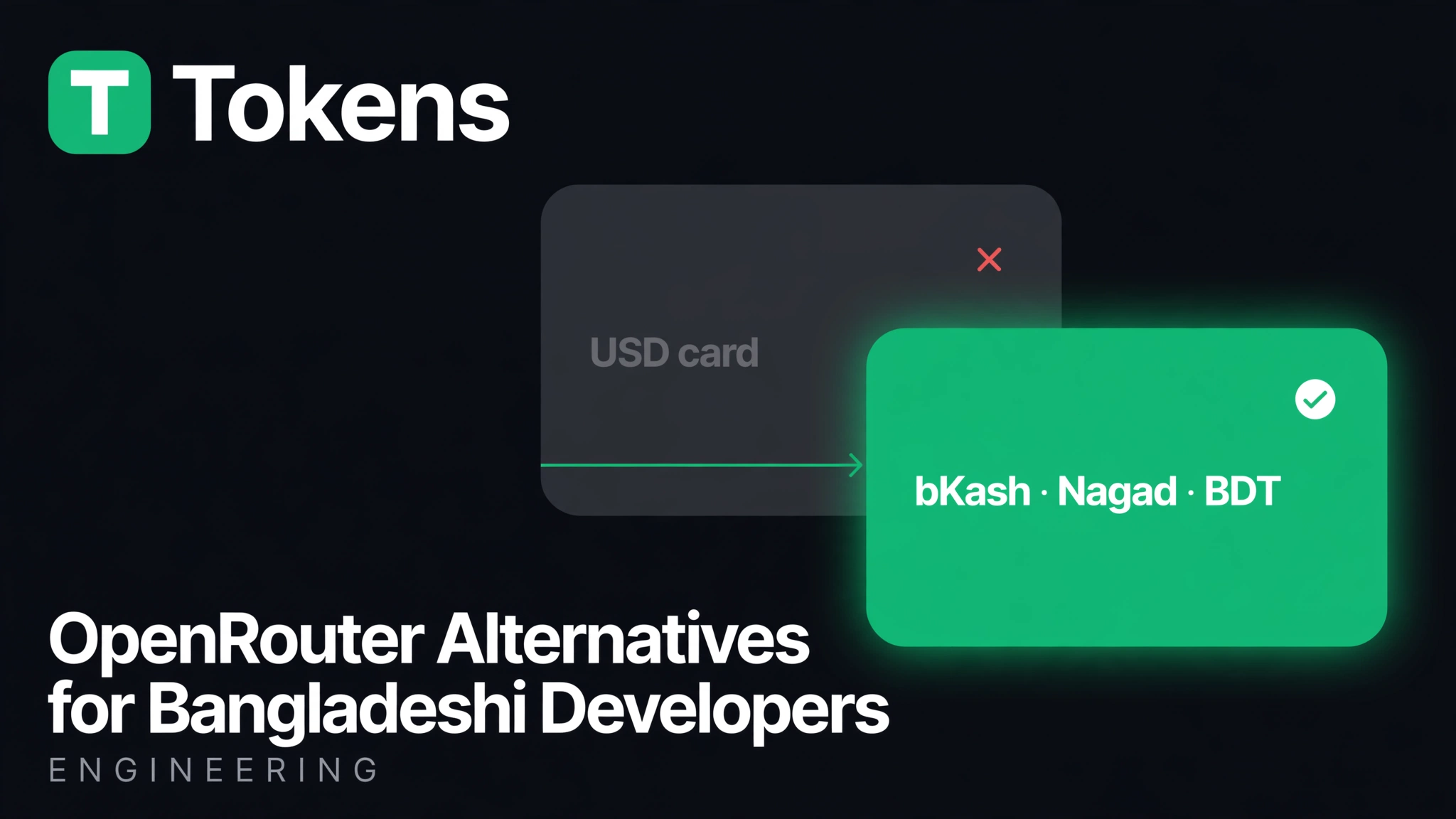
This post compares the three routes on the things that actually decide the invoice: per-token price, purchase fees, how you pay from Bangladesh, spend controls, and what you give up on each route. If you only want the payment-friction breakdown, read OpenRouter alternatives for Bangladeshi developers; this post is the decision guide — which route fits your situation.
The three routes, in one paragraph each#
Direct provider APIs. One account per provider: Anthropic's Console for Claude, OpenAI's platform for GPT, Google AI Studio for Gemini. You pay each provider's list price, in USD, by card — one billing relationship per provider you use.
OpenRouter. One key for hundreds of models from many providers, passed through at provider list prices with no inference markup. You prepay USD credits; OpenRouter takes its cut when you buy credits — 5.5% on Standard, 8% on Business — never per request. Full pricing FAQ, checked 13 October 2026.
tokens.bd. One key for 60+ coding models from 10 providers, priced per model in USD and BDT, with payment in taka via bKash and Nagad plus per-key monthly spend caps. Homepage and catalog, checked 13 October 2026.
What the same model costs on each route#
Claude Sonnet 5.5 is a fair test: it is listed on all three routes, and its provider list price is well documented ($2 input / $10 output per 1M tokens; prompt-cache reads $0.10 per 1M after Anthropic's 7 October cut).
| Route | Input / 1M | Output / 1M | What changes the sticker price |
|---|---|---|---|
| Anthropic direct | $2.00 | $10.00 | Nothing — list price, USD card billing |
| OpenRouter | $2.00 | $10.00 | +5.5% when you buy credits → $2.11 / $10.55 effective |
| tokens.bd | $2.20 | $11.00 | Listed rate (৳275 / ৳1,375 per 1M); no purchase fee |
Rates checked 13 October 2026. OpenRouter's pass-through pricing and fee are per its pricing page; Anthropic list prices per the Sonnet 5.5 rate tables read from Anthropic's docs on 1 October 2026; tokens.bd rates per the catalog homepage list on 13 October 2026. BDT conversions at tokens.bd's listed rate of ~৳125 per USD (verified: $0.24 → ৳30.00 and $2.20 → ৳275.00 on the homepage).
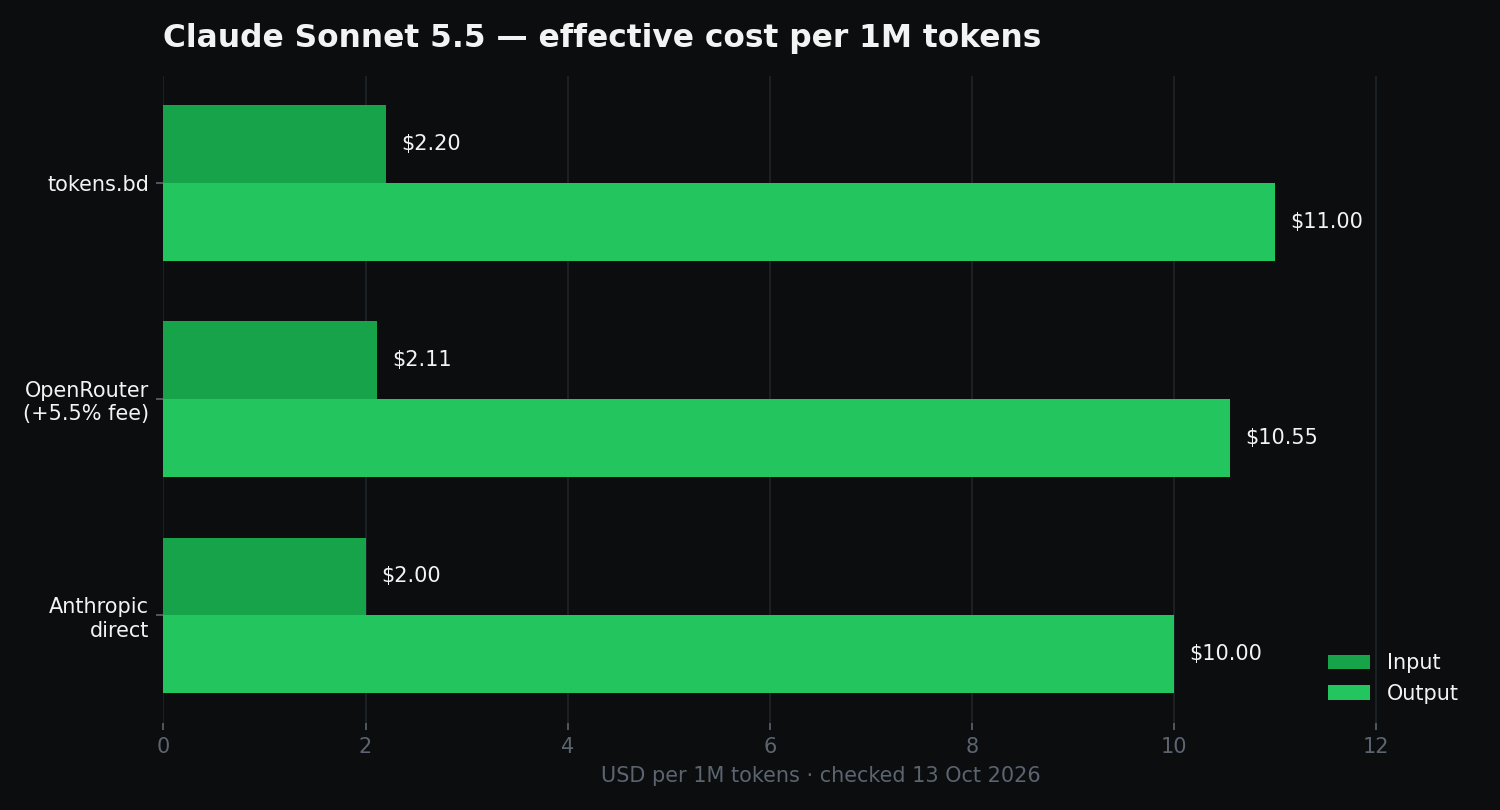
Two honest observations before we go further. First, on raw per-token price, direct is cheapest and tokens.bd is ~10% above provider list ($2.20 vs $2.00) — the gateway keeps a margin, OpenRouter keeps its margin at the credit-purchase step instead. Second, per-token price is only one line of the invoice. The rest of this post is about the other lines.
The monthly-bill scenario: 10M tokens of Sonnet 5.5#
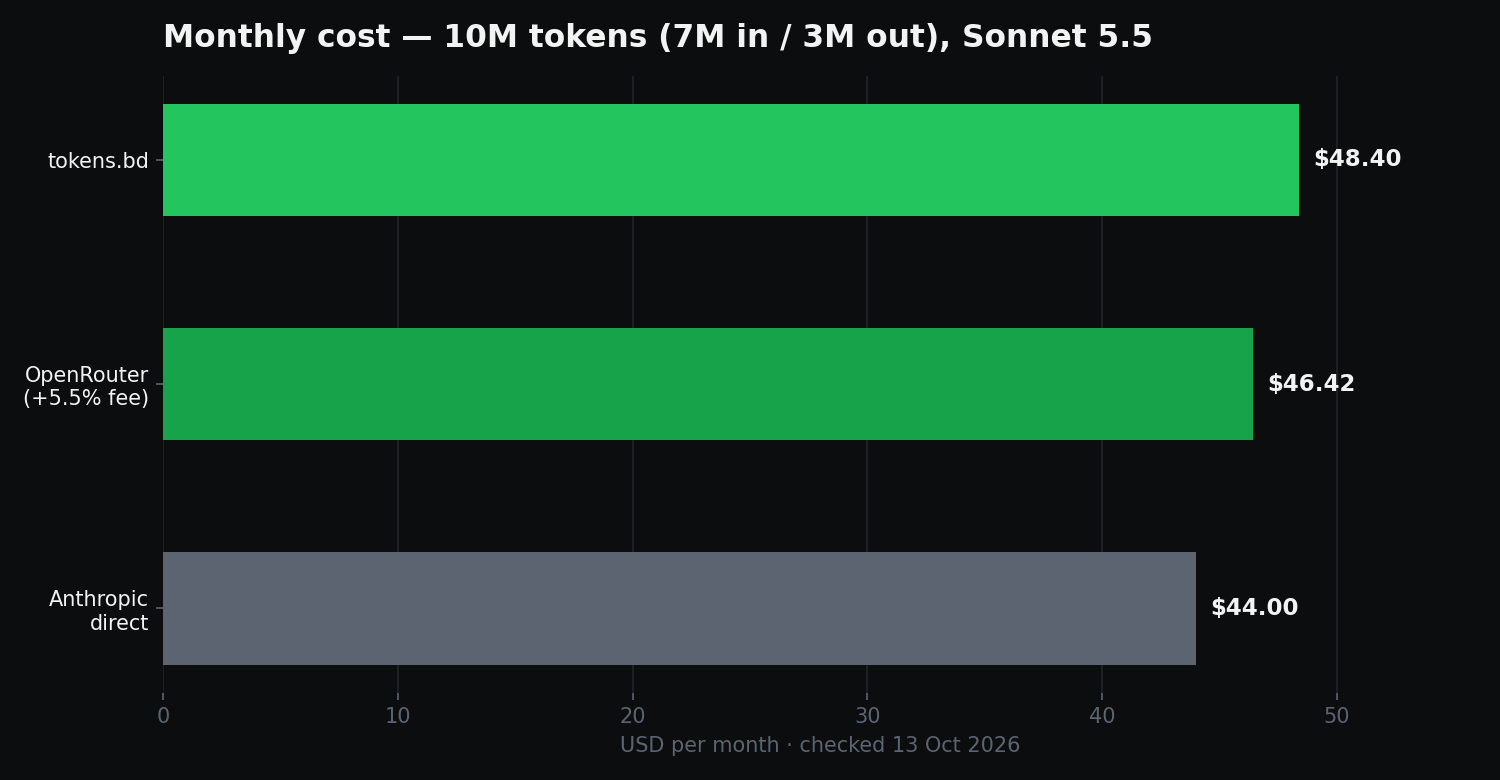
Take a realistic solo-developer month: 10M tokens total, 70% input / 30% output (7M in, 3M out) — the split tokens.bd's own bill estimator uses.
| Route | Math | Monthly total |
|---|---|---|
| Anthropic direct | 7 × $2.00 + 3 × $10.00 | $44.00 |
| OpenRouter | $44.00 × 1.055 (credit fee) | $46.42 |
| tokens.bd | 7 × $2.20 + 3 × $11.00 | $48.40 (≈ ৳6,050) |
Scenario computed from the checked rates above, 13 October 2026. The spread is real but modest: about $4.40 separates the cheapest route from the priciest on this workload. Nobody should switch routes over $4 — switch over what the next sections cover.
The picture flips for cheap models, where the fee structure matters more than the token price. The same 10M-token month on DeepSeek V4.1 Flash at tokens.bd's listed $0.24/$0.86: 7 × $0.24 + 3 × $0.86 = $4.26 (≈ ৳532.50) — a bill that fits inside a single Weekly 5X plan (৳25/week with $10 in credits, ~5K requests). At these price levels, which plan or wallet you use moves the bill more than which model you pick; our BDT pricing guide works the 1M-token math for the full catalog.
Beyond price: the five things that actually decide#
1. Can you pay at all?#
This is the section that decides the route for most developers in Bangladesh before price even enters the room.
- Direct APIs bill each provider separately in USD by card. Bangladesh Bank's FE Circular 26 (2019) caps international-card online payments at USD 300 per transaction with an OTAF form each time — multiply that paperwork by every provider you use.
- OpenRouter is USD-only: cards, AliPay, or USDC on Standard/Business (invoicing on Enterprise). Same card wall, one checkout instead of several.
- tokens.bd takes bKash (Send Money / Payment), Nagad (Send Money / Merchant), bank transfer, and invoice — priced in taka, with a printable receipt per payment.
If you already hold a working dual-currency card, the wall doesn't apply to you and you can weight the other factors. If you don't, only one of the three routes lets you pay today.
2. What stops a runaway bill?#
Coding agents send thousands of requests a day, and a stuck loop at 3 a.m. doesn't check your balance.
- Direct APIs give you per-provider usage limits — configured separately in each console, in each provider's own way.
- OpenRouter workspaces let each API key carry its own credit cap; credits are prepaid, so the balance is the ceiling, and unused credits may expire 365 days after purchase with refunds only inside 24 hours.
- tokens.bd puts a monthly spend cap and an optional model allow-list on every key, with email alerts at 50%, 75%, and 90% — requests past the cap stop with a clear error (402/429) instead of billing you.
If you run agents rather than chats, weight this section heavily. The spend-caps guide shows the setup; the fallback-chains guide covers what happens when a provider fails mid-run (OpenRouter and tokens.bd both retry elsewhere automatically; direct APIs leave that to you).
3. How many models do you actually get?#
- Direct APIs: one provider's models. Mix Claude and GPT and you're back to two bills, two keys, two consoles.
- OpenRouter: the widest catalog — hundreds of model IDs, plus 25+ free models (50 requests/day, 1,000/day after $10 of credits) and fine-grained routing controls (per-request provider ordering, price/throughput sorting, zero-data-retention flags).
- tokens.bd: a curated coding catalog — 60+ models from 10 providers, one key, OpenAI- and Anthropic-compatible endpoints. Smaller than OpenRouter's catalog, focused on coding models.
Nobody uses 400 models. But the long tail matters if your work depends on a specific one — check the catalog before you commit to the curated route.
4. What happens to your prompts?#
- Direct APIs: each provider's data policy applies.
- OpenRouter: prompts and completions are not logged by default (opting in earns a 1% discount); upstream provider policies still apply and you can filter providers by data policy.
- tokens.bd: prompts are never stored — only billing metadata (model, tokens, cost, latency).
If you send proprietary code, this section outranks the price table.
5. How do you switch?#
All three routes speak the OpenAI API format, so switching is a base_url and key change — the pattern is one line in our OpenAI SDK guide:
from openai import OpenAI

client = OpenAI(
    base_url="https://tokens.bd/v1",          # or "https://openrouter.ai/api/v1"
    api_key="tok_live_...",                    # one key, every model
)

resp = client.chat.completions.create(
    model="deepseek/deepseek-v4.1-flash",      # provider/model id
    messages=[{"role": "user", "content": "Explain this diff."}],
)
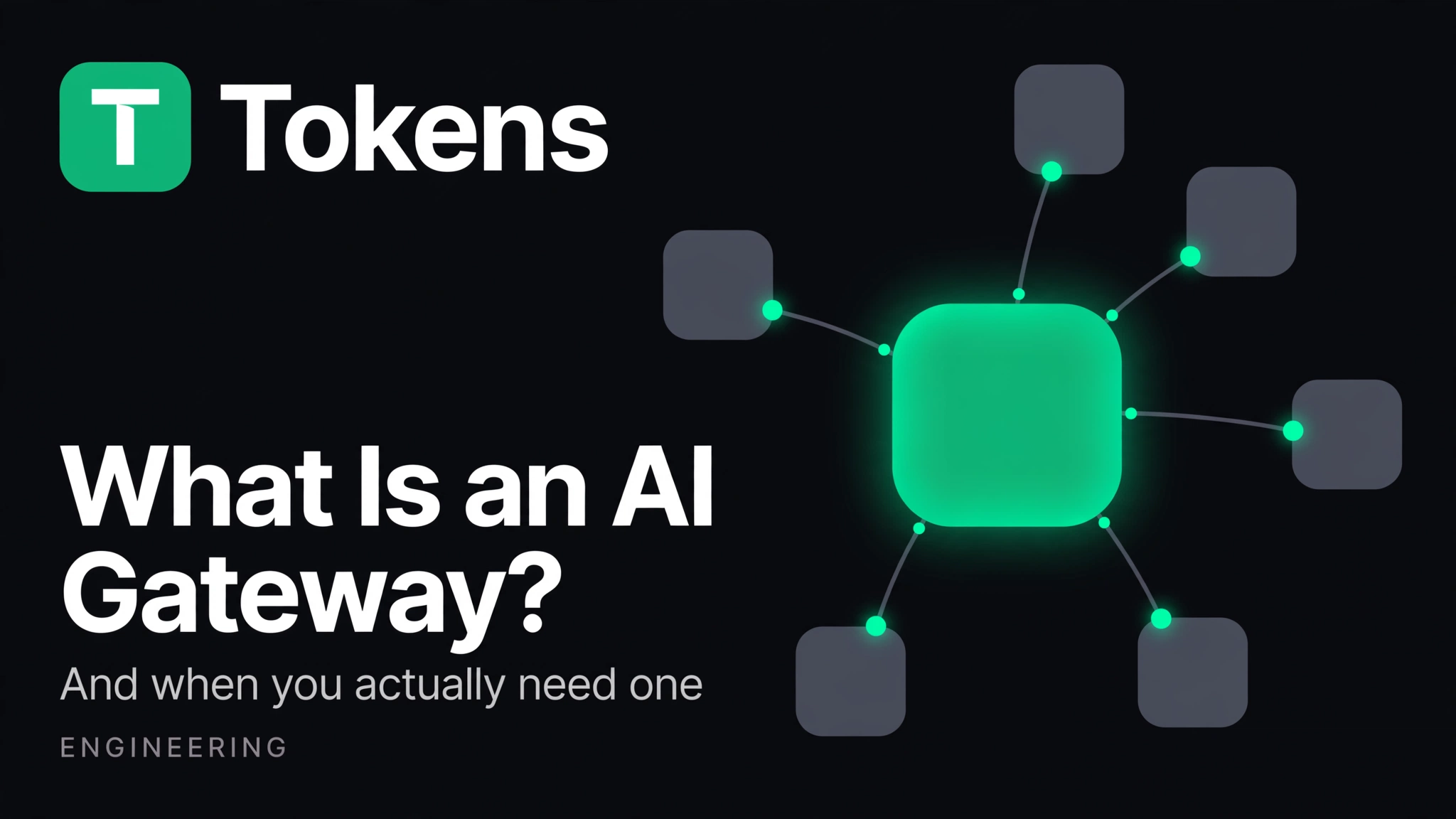
tokens.bd additionally exposes an Anthropic-compatible endpoint on the same key, so Claude Code keeps working with ANTHROPIC_BASE_URL pointed at it — what an AI gateway is explains why the two-endpoint design exists.
The decision guide: which route fits you#
You're experimenting, spending ~$0. → OpenRouter's free tier. 25+ free models at 50 requests/day is the cheapest way to learn, and no paid gateway competes with free. When you outgrow the daily cap, re-read this guide.
You're a solo developer in Bangladesh, paying out of pocket. → tokens.bd. The 10% per-token premium over list price is smaller than the 5.5% OpenRouter fee plus the card friction on every top-up — and you can pay by bKash/Nagad with per-key caps protecting you from runaway agent loops. Check per-token rates against your actual usage in the catalog first.
You're a team running agents in production. → Depends on your billing setup. If your company already pays providers in USD with cards on file, direct APIs give you the lowest per-token cost and provider SLAs. If spend control across many keys matters more than the last 10% of token price, tokens.bd (per-key caps, allow-lists, 75/90% alerts, receipts for reimbursement) or OpenRouter (workspace key caps, EU in-region routing on Business) earn their margin.
You need a model outside the curated catalogs. → OpenRouter. Its hundreds of model IDs cover long-tail models no curated catalog will. Verify the exact model ID exists before you build around it.
You need the provider's SLA or a negotiated contract. → Direct APIs (or OpenRouter Enterprise). Gateways don't sell you Anthropic's or OpenAI's SLA; OpenRouter's own status page and tokens.bd's /status page are the uptime sources on the gateway routes.
The one-line version#
Direct APIs win on raw per-token price if the card works for you. OpenRouter wins on catalog breadth, free models, and routing control. tokens.bd wins when you pay in taka, run coding agents, and want every key capped and every payment receipted. The price table says the routes are within ~10% of each other on a typical month; the payment method, the spend controls, and the privacy policy are where the real gap is. The full side-by-side with dated competitor prices — including the rows where OpenRouter wins — is at tokens.bd vs OpenRouter.
Route FAQ#
Is OpenRouter cheaper than going direct? For the tokens themselves, no: OpenRouter passes provider list prices through with no markup, so the tokens cost the same and the 5.5% Standard credit-purchase fee sits on top. OpenRouter can be cheaper for open-weight models, where competing third-party hosts undercut the model maker's price. (Per OpenRouter's pricing FAQ, checked 13 October 2026.)
Can I use Claude Code or Codex CLI without an international card?
Yes — through a gateway that accepts local payment. tokens.bd's one-command setup (tokens.mjs setup) configures Claude Code, Codex CLI, OpenCode, and Crush against its endpoints, billed in taka via bKash/Nagad. OpenRouter and direct provider APIs both require USD payment.
Does switching gateways mean rewriting my code?
No. All three routes are OpenAI-compatible, so you change base_url and the API key; model IDs differ (claude-sonnet-5-5 on Anthropic's API, provider/model slugs on the gateways). The OpenAI SDK guide shows the exact swap.
Which route is cheapest for heavy agent use? Per token, direct APIs — but only if you can pay the providers directly and you build your own spend guardrails. For most developers in Bangladesh, the realistic contest is OpenRouter (+5.5% fee, USD card) vs tokens.bd (~10% over list, BDT payment, per-key caps). Run your own numbers on the 10M-token scenario above with your input/output split.
Prices checked 13 October 2026. OpenRouter fee, payment-method, and free-tier figures per OpenRouter's pricing page (checked 13 October 2026); Anthropic Sonnet 5.5 list prices ($2/$10 per 1M, cache reads $0.10) per rate tables read from Anthropic's documentation 1–8 October 2026; GPT-6.1 Sol $2/$10 and Gemini 3.8 Flash promotional $0.75/$3.75 per the VentureBeat price table (checked 7 October 2026); tokens.bd plan and catalog prices per tokens.bd (checked 13 October 2026). The maker's page is the authority for list prices, and the model catalog for prices on Tokens. BDT conversions at tokens.bd's listed ~৳125 per USD.
Sources: OpenRouter pricing · Tokens homepage and catalog · Tokens vs OpenRouter · Claude Sonnet 5.5 vs Sonnet 5 rates · VentureBeat: Haiku 5.5 launch price table · GPT-6.1 Sol vs Sonnet 5.5 pricing